Community initiatives at Zuari FarmHUB is based on the principle that the business and its surroundings are very closely dependent on each other, and focusses on strengthening the organic link between the two. Zuari FarmHUB’s approach is to create value for all stakeholders, including society at large. At Zuari FarmHUB, we believe in empowering communities at the locations that we operate in. Zuari FarmHUB brings about a change in the lives of the deprived communities by presenting opportunities for skills and education, safe sanitation, impacting livelihoods and better health outcomes.
Community development is central to the core values we adhere to in Zuari FarmHUB. Our community development programme aims at building trust and improving the quality of life of the people. Project SAHYOG was initiated in Zuarinagar, Goa to protect and nurture communities and to help achieve self-sufficiency in livelihood development and enhancement of health and education and infrastructure development etc. Apart from the community, the programme also involves volunteering by company employees and their family members. This helps enhance corporate rapport with the community, and sensitises employees towards societal issues.
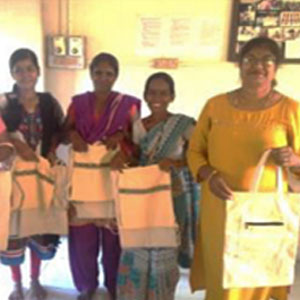
Women empowerment
Zuari FarmHUB seeks to equip women from the local community with important employment generating skills. These include entrepreneurship development for women, vocational training and the creation of small-scale enterprises. Zuari FarmHUB has organised poor women from the Zuarinagar area into twenty Self-Help Groups (SHGs) and helped them register under the Societies Registration Act, 1860.
Zuari FarmHUB Livelihood centre
Zuarinagar has a floating population of migrant families from neighbouring states of Kerala, Karnataka, Maharashtra etc., primarily dependent on daily wage occupations in the nearby industrial area. The skills gap study conducted by Zuari FarmHUB captured youth aspirations for training and registered high demand for tailoring, electrician, computer skills, beautician training and spoken English.


Educational scholarships
Zuari FarmHUB extends financial support in the form of scholarships to meritorious students, one each in Agriculture and Engineering degree courses annually. These scholarships are awarded based on merit cum financial background i.e. 85% for merit and 15% for parental income status.
Environment
Environmental sustainability is a key aspect of Zuari FarmHUB’s sustainable development initiatives. The company strives to educate local communities about environmentally sustainable agricultural practices, promote awareness programmes in villages in and around the plant area and implement plantation campaigns.
Zuari FarmHUB is promoting vermicomposting in its campus in Goa and is the first company in India to undertake a vegetative mapping exercise within its industrial campus carried out in conjecture with Botany Department, Goa University. The green vegetative cover at Zuarinagar spreads across over a thousand acres with more than 2,00,000 trees pertaining to 80 species including ground fauna and 80 species of birds
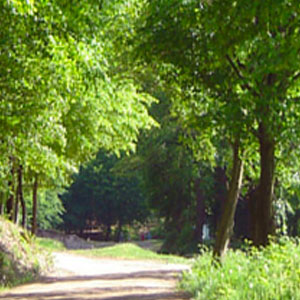
Trees at Zuari Nagar
Zuari FarmHUB is the first company in India to undertake a vegetative mapping exercise within its industrial campus. Eco-scientists and botanists use this technique to profile existing vegetation within an area by cataloguing trees and other vegetation. This vegetative mapping project was carried out in collaboration with the Botany department of Goa University. The head of the botany department Dr Torne formed a team of botanists and research students for the assignment.
Orchid project
Due to a booming tourism industry, there is a huge demand for flowers in Goa especially from the hotel industry in Goa. Every year the state imports flowers worth Rs. 4 cr to meet this demand.
High-tech flower growing in Goa is not common. However, the climatic conditions in Goa are ideal for the growth of Orchids. It is due to these ideal conditions, combined with the demand for flowers that Zuari FarmHUB seeks to encourage farmers to take up orchid cultivation in coastal areas.

Cashew project
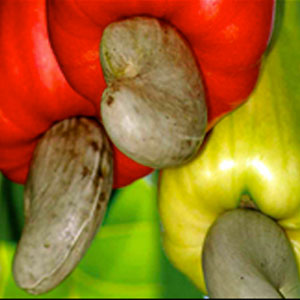
Cashew is one of Goa’s most important horticultural crops. The crop is grown over 55,000 hectares. It is only recently that cashew growing in Goa has come into the limelight as a cash crop. Though cultivation of cashew in Goa can be traced back to the Portuguese, for many years the crop was not grown commercially. Originally, a local variety of cashew was grown in Goa and the use of high yielding varieties of the crop was unknown to local farmers.